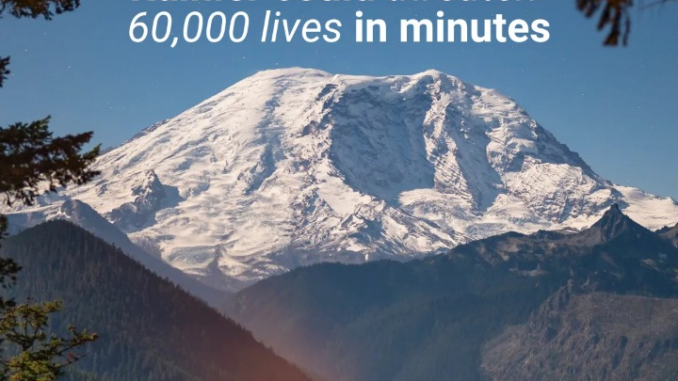
Scientists studying volcanic and seismic activity in the Cascadia region are raising concerns that fast-moving mudflows could pose a greater danger to nearby communities than lava itself.
Unlike lava, which typically moves slowly enough for evacuation in many scenarios, mudflows—also known as lahars—can surge rapidly through valleys and river channels with little warning. These flows of ash, rock, and water can travel at high speeds, destroying roads, bridges, and entire neighborhoods in their path.
Experts explain that the volcanic landscape of the Cascades, combined with heavy rainfall, snowmelt, or sudden eruptions, creates conditions where these destructive flows can form quickly and unpredictably. This makes them especially dangerous for towns located near river systems flowing down from volcanic peaks.
Researchers emphasize that improving early warning systems and evacuation planning is critical to reducing risk. Public awareness campaigns and monitoring networks are also being expanded to help communities respond faster if a lahar is detected.
While lava often captures more public attention, scientists stress that mudflows may represent the more immediate and widespread hazard for people living in the shadow of the Cascade Range.
🌋⚠️ Preparedness, they say, could make all the difference.
Leave a Reply