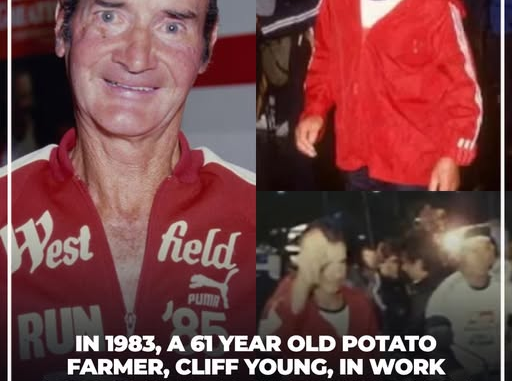
In 1983, elite ultramarathon runners from around the world arrived in Sydney for a grueling 544-mile race. They came prepared with sponsors, coaches, advanced training plans, and carefully managed sleep schedules.
Then there was Cliff Young.
A 61-year-old Australian farmer, Cliff showed up wearing overalls and gumboots. He left his dentures at home and casually told reporters that he spent his days running after sheep across his family’s farm.
Nobody took him seriously.
When the race began, the professional runners surged ahead while Cliff shuffled along at an awkward, slow-looking pace. His unusual running style, later known as the “Young Shuffle,” drew smiles and skepticism from spectators and competitors alike.
But there was one thing Cliff understood that the others didn’t.
For decades, he had worked on a massive sheep farm, often running for days through harsh weather to gather livestock. While other competitors followed a strategy of running for a while and then sleeping, Cliff simply kept moving.
As the elite runners stopped each night to rest, Cliff continued shuffling forward.
By the second day, he had taken the lead.
By the fifth day, he crossed the finish line in 5 days, 15 hours, and 4 minutes—shattering the previous record by nearly two full days and finishing about 10 hours ahead of the next runner.
Then came perhaps the most remarkable part of the story.
When Cliff learned there was prize money, he was surprised. Believing the other runners had worked just as hard as he had, he divided the winnings among them instead of keeping it for himself.
His victory became one of the greatest underdog stories in sports history. Australia later honored him with a monument, and his unique running technique inspired a new generation of ultramarathon athletes.
Cliff Young proved that sometimes the person who wins isn’t the fastest, strongest, or most celebrated.
It’s the one who simply refuses to stop.
Leave a Reply